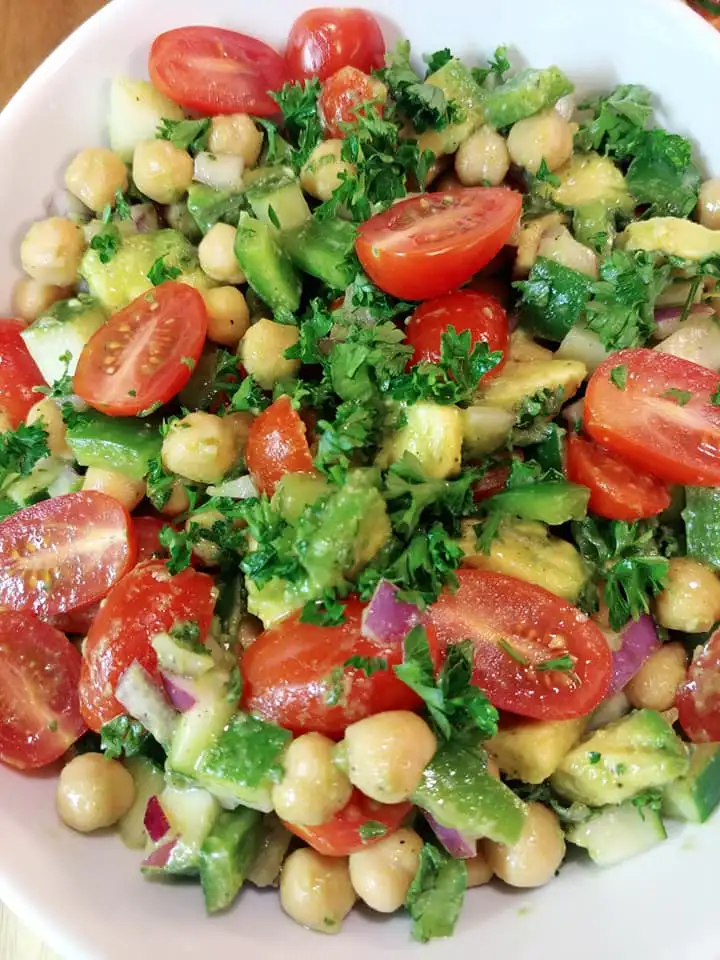
Chickpea Veggie Salad
by Karishma Jain
Editor’s Note for Parents: This may be a difficult recipe for young chefs to do on their own, but it’s a great recipe to work on together as a family. Give kids small jobs to teach them a few basics of preparing a nutritious meal. Also, showing kids how the ingredients represent different themes from the Bible is a great way to make the Bible come to life in your kitchen.
Here’s a Christian-themed Chickpea Veggie Salad inspired by the simplicity and nourishment found in biblical foods. Chickpeas, a common ancient legume, combined with fresh vegetables and olive oil, create a dish reminiscent of the Mediterranean diet often associated with biblical lands.
This salad is both nourishing and symbolic; it combines simple, wholesome ingredients with spiritual significance, reflecting God’s provision and the bounty of the earth.
Biblical Context:
- Chickpeas: Though not mentioned explicitly, legumes were a key food source in ancient diets and represent God’s provision.
- Olives: Symbolic of peace and the covenant between God and man, olives and olive oil were integral to daily life in biblical times.
- Fresh Vegetables: The Bible references “fruits of the earth” often as a blessing from God. The variety of colors in this salad can symbolize the diversity and beauty of God’s creation.
Ingredients (Serves 4):
- 2 cups soaked and boiled chickpeas (drained and rinsed) — Symbolize abundance and sustenance from God, as legumes were a staple food in biblical times and rich in protein.
- 1 cup cucumber, diced — Symbolizes freshness and purity, as cucumbers were mentioned in Numbers 11:5, part of the Israelites’ diet.
- 1 cup cherry tomatoes, halved — Symbolizes the harvest and gratitude for the fruit of the earth.
- 1/2 cup red bell pepper, diced — Represents the variety and color in God’s creation.
- 1/4 cup red onion, finely chopped — Symbolizes the layers of life and spiritual understanding.
- 1/4 cup chopped fresh cilantro — Represents renewal and new beginnings, echoing the rebirth found in Christ.
- 1/4 cup black olives, pitted and sliced — The olive tree symbolizes peace, endurance, and God’s anointing.
- 2 Tbsp olive oil — Olive oil is significant in the Bible as a symbol of anointing and sanctification.
- 1 Tbsp lemon juice — The lemon represents brightness and God’s grace, bringing balance to life.
- 1 tsp ground roasted cumin (optional, for added depth) — Spices represent the variety of gifts God gives us.
- Salt and pepper to taste — To season as we are called to be the “salt of the earth” (Matthew 5:13).
Steps:
1. Prepare the Vegetables: In a large bowl, combine the chickpeas, diced cucumber, cherry tomatoes, red bell pepper, red onion, and black olives.
2. Make the Dressing: In a small bowl, whisk together the olive oil, lemon juice, cumin (if using), and a pinch of salt and pepper.
3. Assemble the Salad: Pour the dressing over the salad and toss gently to combine everything. Sprinkle the chopped cilantro over the top for a fresh finish.
4. Serve: Serve the salad chilled or at room temperature. Garnish with lemon wedges if desired.
See Karishma Jain‘s poetry and photography in Issue #8.
< Previous (Recipe: Stuffed Bell Peppers)
Back to Issue #8
Image is courtesy of Karishma Jain. All rights reserved.
